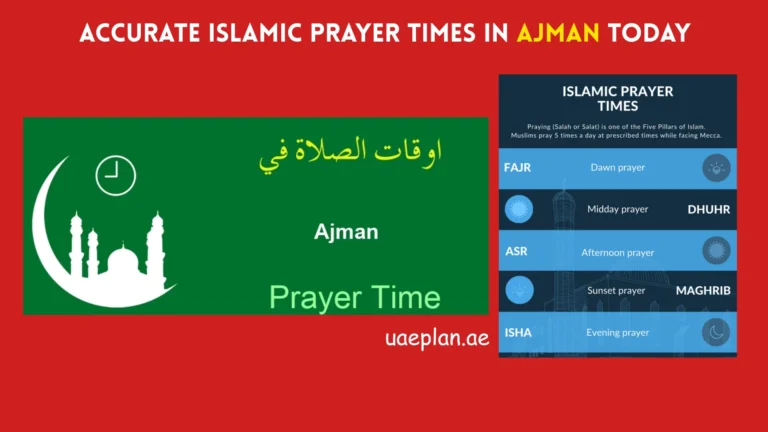
Latest Today’s UAE Prayer Times | Accurate Daily Namaz Timings Now!
Every Muslim in or travelling to the UAE must keep themselves informed about the Dubai prayer times. Salah is amongst the five fundamentals of the Islamic faith, and practicing it at the right time brings not only peace, discipline, and spiritual strength.
Whether it is Asar namaz time in Dubai during the afternoon or Adhan time in Dubai in the morning, you want to know. Correct timings update you when to pray so you do not miss out. As Dubai is a busy urban centre with dynamic schedules, its five daily prayers:
Muslim prayers: Salah timings, Adhan, and rakat
Salah (Namaz) is more than a ritual and is one of the five pillars of Islam, which are the core elements of the Muslim religion. It brings serenity, discipline, and a sense of spirituality in the presence of Allah (SWT). Salah is mandatory to all adults of the Muslim faith, and should be practised at its intended time under the direction of the movement of the Sun.
The Five Pillars of Islam
Shahada (Profession of Faith): It’s a clarification that there is no existence of any God but Allah, and that Prophet Muhammad (PBUH) is His Messenger. It’s a belief of all muslims in their region.
- Salah (Prayer): Five daily prayers at fixed times.
- Zakat (Charity): Helping the poor.
- Sawm (Fasting): Strict fasting during the holy month of Ramadan.
- Hajj (Pilgrimage): The Sacred pilgrimage to Makkah to visit at least once in a lifetime, when possible.
Adhan: A call to prayer
Five times a day, a public call to prayer is known as the Adhan. The Adhan is called by the muezzin from the masjid. Who is the masjid’s designated caller of worship? During the call to prayer, the muezzin recites the following Takbir (glorification of God), “Allahu akbar”, which translates as “Allah is great”
The full call to prayer (Azaan)
Daily Prayer Timings (Adhan)
The Significance of the Adhan
Adhan (Call to Prayer) is one of the most beautiful and strong symbols of Islam. It is administered five times a day as an invitation to Muslims to abandon worldly affairs and pray to Allah (SWT).
Historically, the Adhan is read from the minaret of a masjid, facing the direction of Makkah and the Holy Kaaba. In most Muslim-majority nations, it rings out in the streets as a spiritual reminder that faith is deeply embedded in everyday life.
Wudu Before Salah.( Wazu)
Muslims cleanse themselves with the Wudu (ablution) before they come in front of Allah. This physical cleansing of specific body parts, including the face, hands, arms, head, and feet, is a sign of purity in both physical and spiritual nature.
Wudu (Wazu) not only cleanses the body but also the heart and mind, which reminds Muslims that prayer is indeed a holy dialogue with their Creator.
Different Types of Rakats in Salah Prayers in Islam
Practices of prayers in Islam are of two broad categories:
- Fard (compulsory)
- Sunnah/Nafl (non-compulsory).
The prayers that all Muslims are required to perform are the Fard prayers. These five prayers of the day are not only routine, but they are a fundamental pillar of Islam and a vital aspect of a Muslim’s life.

Compulsary (Faraz) Rakats in Salah
Rakat: a prayer unit which consists of the sequence of movements (including bow and prostration) and recitation of verses in the Holy Quran. The five daily prayers have a fixed number of Rakats:
Conversely, Sunnah and Nafl prayers
They are not compulsory, but they are of immense value. A prayer performed by the Prophet Muhammad (peace be upon him); such prayers are referred to as Sunna prayers, and offering such prayers is rewarded with extra gifts.
5 Other Important Prayers
In addition to the five mandatory Salah, Islam promotes the other prayer types that enhance spirituality:
Jumuah Prayer: A weekly congregational prayer every Friday at noon with a Khutbah (sermon).
Tahajjud Prayer: This is an optional evening prayer done at the latter end of the night by those who want to have closeness to Allah.
Tarawih Prayer: Ramadan special prayers that follow the Isha prayer.
Eid Prayers: Festal prayers that are given during the Eid al-Fitr and Eid al-Adha that signify happiness, unity, and thanks.
What Are The Procedures for Determining Dubai Prayer Times?
The Nmaz times are determined according to the Islamic lunar calendar, combined with sunset and sunrise information. Every prayer has a designated period of time for praying.
These timings are revised daily to ensure that Muslims observe their worship according to the correct schedule.
Praying in the Masjid
Muslims may pray at home, in the workplace, and even when travelling. However, a good number would rather join a congregation prayer in a Masjid (Mosque), the holy Muslim worship place.
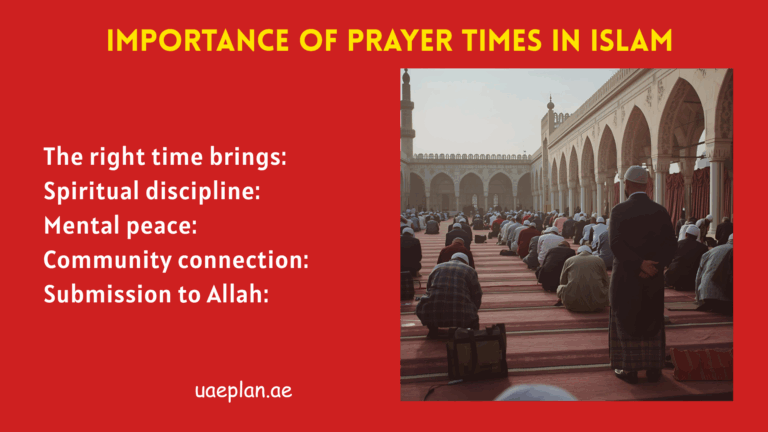
Togetherness during prayers fosters a sense of unity and equality among believers, reminding them that all humanity is equal in the eyes of Allah (SWT). The Masjid is not merely a place of space; it is a space where hearts intertwine, communities build, and faith becomes stronger.
Jumuah – The Friday Prayer
Beyond the five daily Salah, Muslims gather every Friday for the special Jumuah prayer. This prayer substitutes the regular Dhuhr prayer on Fridays and a Khutbah (sermon) by the Imam.
To Muslims, Jumuah is not merely a prayer session; it is a weekly communion of faith, where they engage in reflection, learning, and spiritual rejuvenation. It serves as a reminder of the typical duties and solidarity within the community, while also promoting awareness of Islamic teachings.
Top 4 Benefits of Salah Positions
Each Salah is not just a ritual; it has both spiritual content and physical benefits. Standing to bowing, prostrating, and sitting, all of these postures are indications of submission to Allah (SWT) as well as body nurturing.
Qiyam (Standing)
Ruku (Bowing)
Sajdah (Prostration)
Tashahhud (Sitting Posture)
Salah, in other words, is an act of complete worship in both body and soul: as the soul rests in remembering Allah, the body is treated to gentle stretches, increased circulation, and better posture.
Dubai Picture Caption Date and Time: 23.08.2025 16.47
The latest prayer timings in Dubai are given below:
This timing is well-chosen, based on the Islamic lunar calendar and the Sun’s location. You can count on them to help you be on time with your salah time in Dubai.
Why is it essential to have accurate Nmaz times in Dubai?Praying in the UAE is not only a ritual, it is a way of life. To Muslims, Salah should be conducted at certain intervals, and the correct Dubai Salah time acts as the organizer of the day.
Based on the most popular search requests from many residents and visitors to the city of Dubai, today’s prayer time is being shared to avoid overlapping with work, travel, and family activities. Ramadan presents special requirements of Sehri and Iftar timings, which are also notified to accuracy.
As another example, those living in Dubai should hear the Maghrib adhan call when they break their fast, and Fajr will ring, and they will start fasting.
Prayer Times in the Cities of the UAE
The prayer times vary by a few minutes within the Emirates as the sunrise and sunset change. Below are today’s time schedules in central locations:
Prayer Timings in UAE Cities in August (August 23, 2025- Safar 30, 1447 AH)City Fajr Dhuhr Asr Maghrib Isha joese dont
Prayer Times Across UAE Cities (October 06, 2025 – Rabiʻ II 14, 1447 AH)
City Fajr Dhuhr Asr Maghrib Isha
It means that, regardless of the city, Dubai, Abu Dhabi, Sharjah, among others, it is easy to find your precise salah time.
Simple Methods of Time Check Salah in Dubai
Frequently Asked Questions
Final Words
Staying updated on the prayer times in Dubai is a sure way to never miss Salah. All the prayers are an addition to your faith between the first hours of the day and the calm time in the evening. Proper timetables help Muslims execute their duties efficiently.
Reliable resources (which should be continually updated) must be used when determining the Dhuhr time in Dubai, Asar namaz time in Dubai, and Maghrib adhan time in Dubai. While in a busy city like Dubai, it becomes essential to stay connected to prayer times, ensuring your spiritual routine remains balanced and consistent.